

5 Common Loc Problems We See at TressesbyK and How We Help Our Clients..
At TressesbyK, we work with clients at every stage of their loc journey and over the years, we have noticed that certain loc problems recur.
Here are five of the most common loc problems we encounter in the salon, along with how we help our clients manage them.
1. Slippage and Marrying Locs
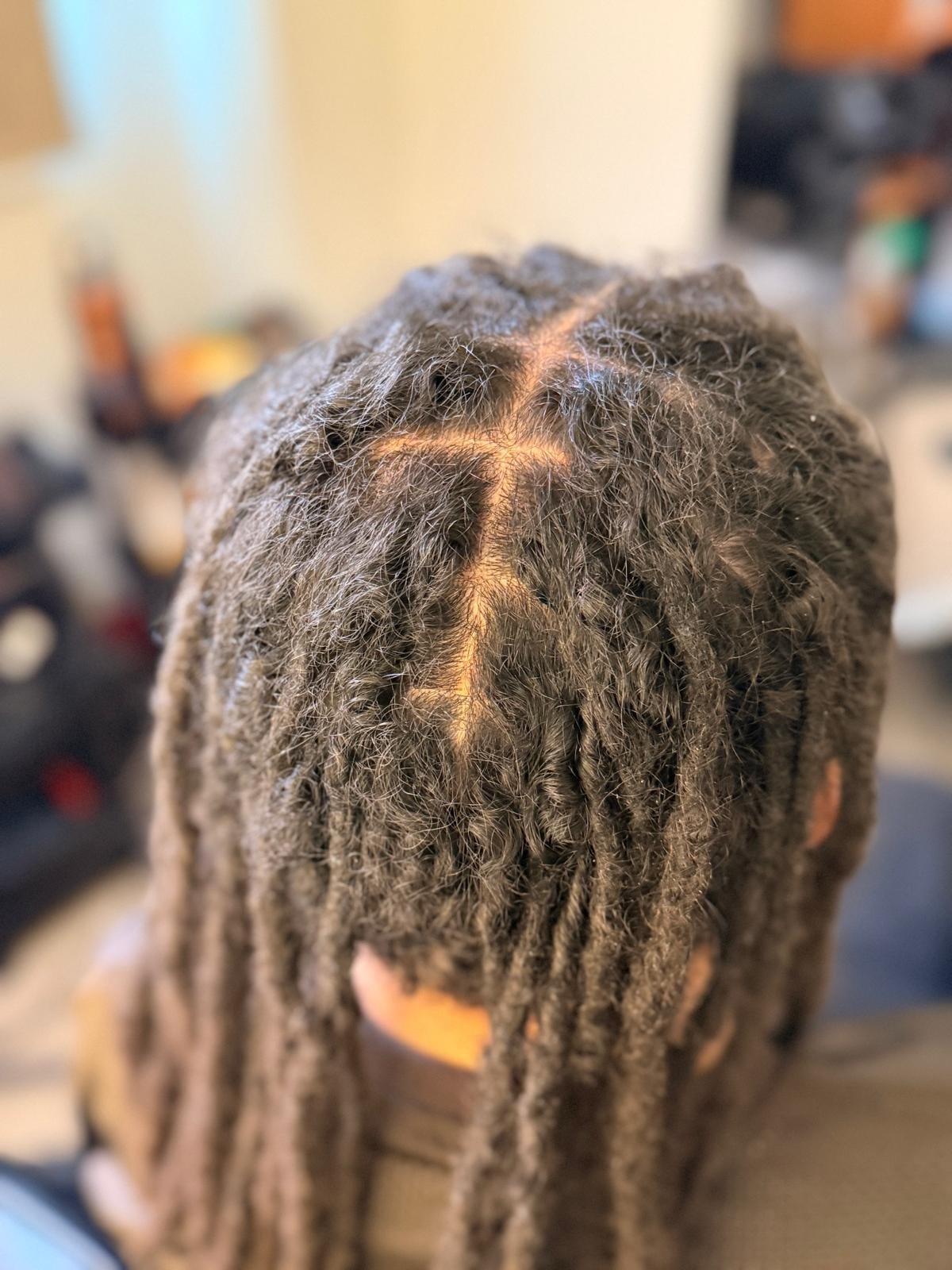
Slippage happens when locs begin to loosen. Marrying happens when two or more neighbouring locs join at the roots.
Common Causes
Poor maintenance routines
Frequently changing stylists
Attempting self-maintenance without proper training
Missing retie appointments
Excessive new growth left unmanaged
How We Help
When clients come to us with slippage or marrying locs, we first assess the extent of the issue and determine whether correction is needed or if it’s even possible.
Often, what we find is that these particular issues develop when maintenance schedules are inconsistent or when multiple people use different techniques on the locs.
Our approach focuses on restoring the integrity of the locs. We separate married locs where possible and create a maintenance plan that supports healthy growth moving forward. The plan includes timely reties and continuous repairs during salon visits.
One thing we have learned over the years is that a missed appointment today can easily become a lengthy repair appointment months later. And so with such clients, and depending on the work needed, we may have a prolonged correction period where we work on the locs in sections over multiple structured visits.
2. Alopecia
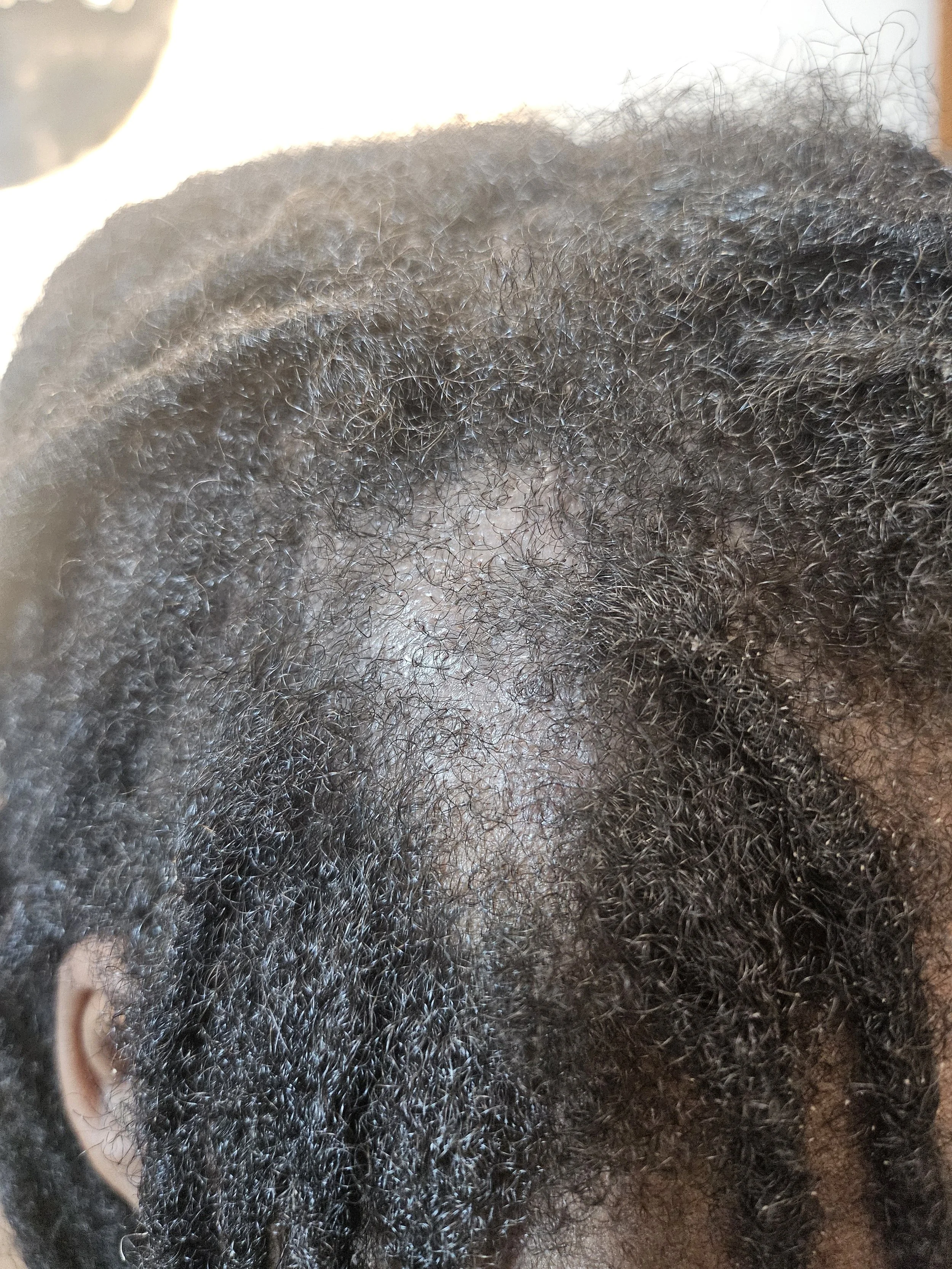
image of an alopecia patch
Alopecia simply means hair loss and thinning. It often develops gradually and may not be noticed until significant thinning has already occurred.
Common Causes
Tight hair styling over long periods
Excessive tension during interlocking
Wearing styles longer than recommended
Hormonal changes
High stress levels
Certain medical conditions and treatments
How We Help
When a client comes to us with hair loss or thinning or hair los, our priority is understanding the cause rather than simply treating the visible symptoms.
We assess styling history, maintenance practices, and any factors that may be contributing to the problem.
Where necessary, we adjust maintenance techniques to reduce tension or minimise further stress on the hair and scalp. We do this by giving longer schedules and leaving locs unstyled for clients with tension alopecia.
In some situations, like during hormonal changes following childbirth or certain medical treatments, we recommend a "bare treatment" approach. This is where we advise clients to wash their locs regularly while avoiding unnecessary styling, products, and manipulation until the scalp stabilises or the hair texture improves.
We also refer clients for a better assessment from a qualified trichologist to properly identify the underlying cause before commencing any treatment. We believe in treating the cause rather than treating the symptom.
See our hair growth oil and serum recommendations for tension alopecia.
3. Unravelling Starter Locs
This is one of the most common concerns for clients at the beginning of their loc journeys.
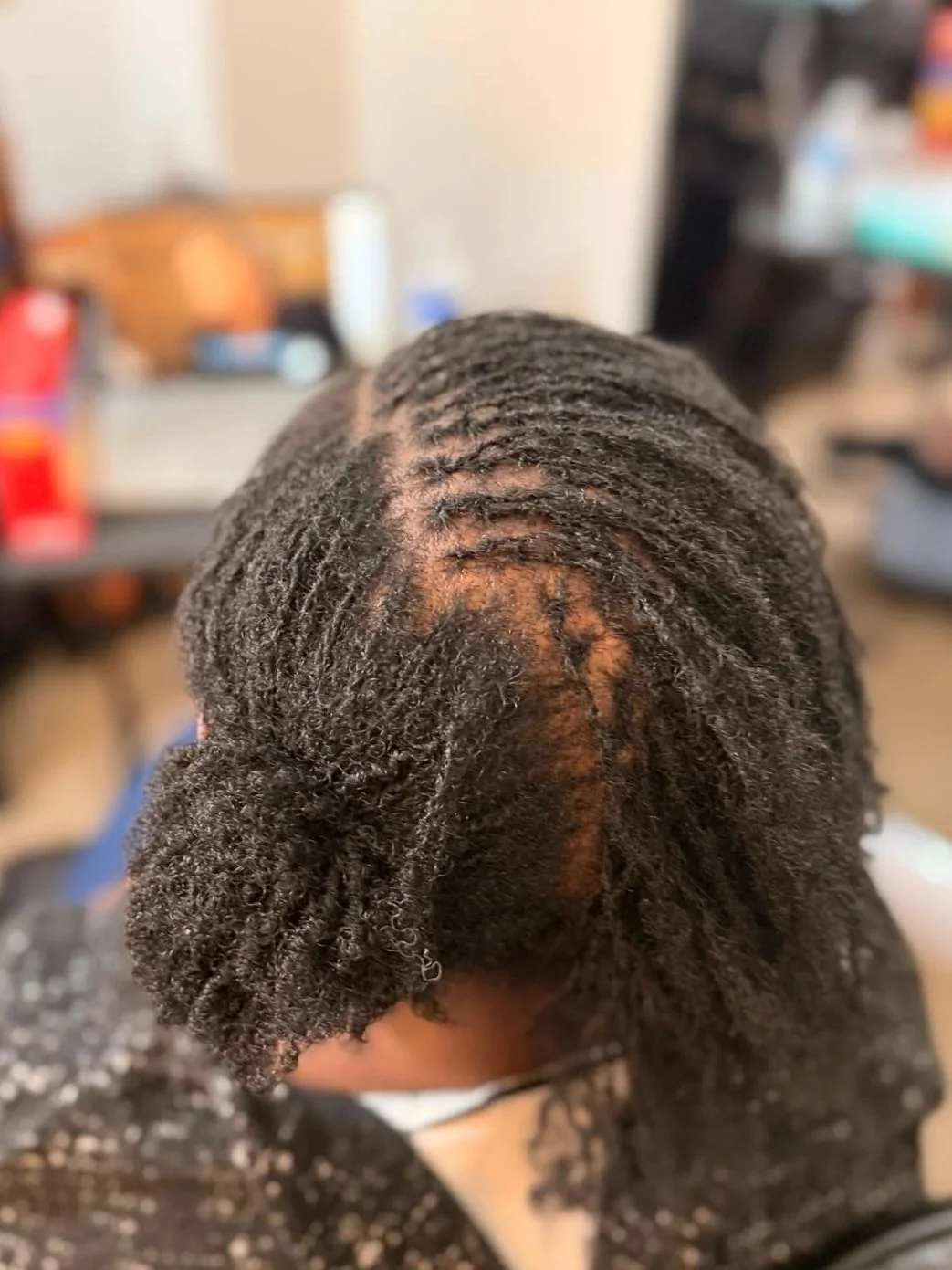
Starter locs don’t fully loc immediately. They are naturally more vulnerable to coming apart. And various factors contribute to this. See below.
Common Causes
Washing without braiding and banding
Moisture weight [during swimming, showering, bathing or excessive sweating- common for the locs at the edges]
Sleeping without an appropriate hair covering
Excessive handling of new locs
How We Help
A large part of our role during the starter loc phase is to help clients understand what is normal and what requires intervention. We give information and education on loc maintenance during our pre-installation consultation sessions.
Frizz or slight unravelling concerns most new loc clients, but in most cases, this is simply part of the locking process.
That’s why we guide clients through the early stages of their journey, provide maintenance at appropriate intervals, and help protect vulnerable areas such as the edges, which are often the first to unravel.
Our goal is to support the locking process while helping clients avoid unnecessary setbacks during those crucial first few months. Some practical advice we give clients include:
Covering hair tightly during swimming or any other water exposure
Avoiding overmanipulation [mostly through multiple styling]
Covering hair with a satin bonnet when sleeping to minimise friction
Dry hair immediately if prone to excessive sweating
Braiding and banding during the first few washes after installation
4. Dryness and Dandruff
A dry, flaky scalp is frustrating. And it is the most common issue our clients have.
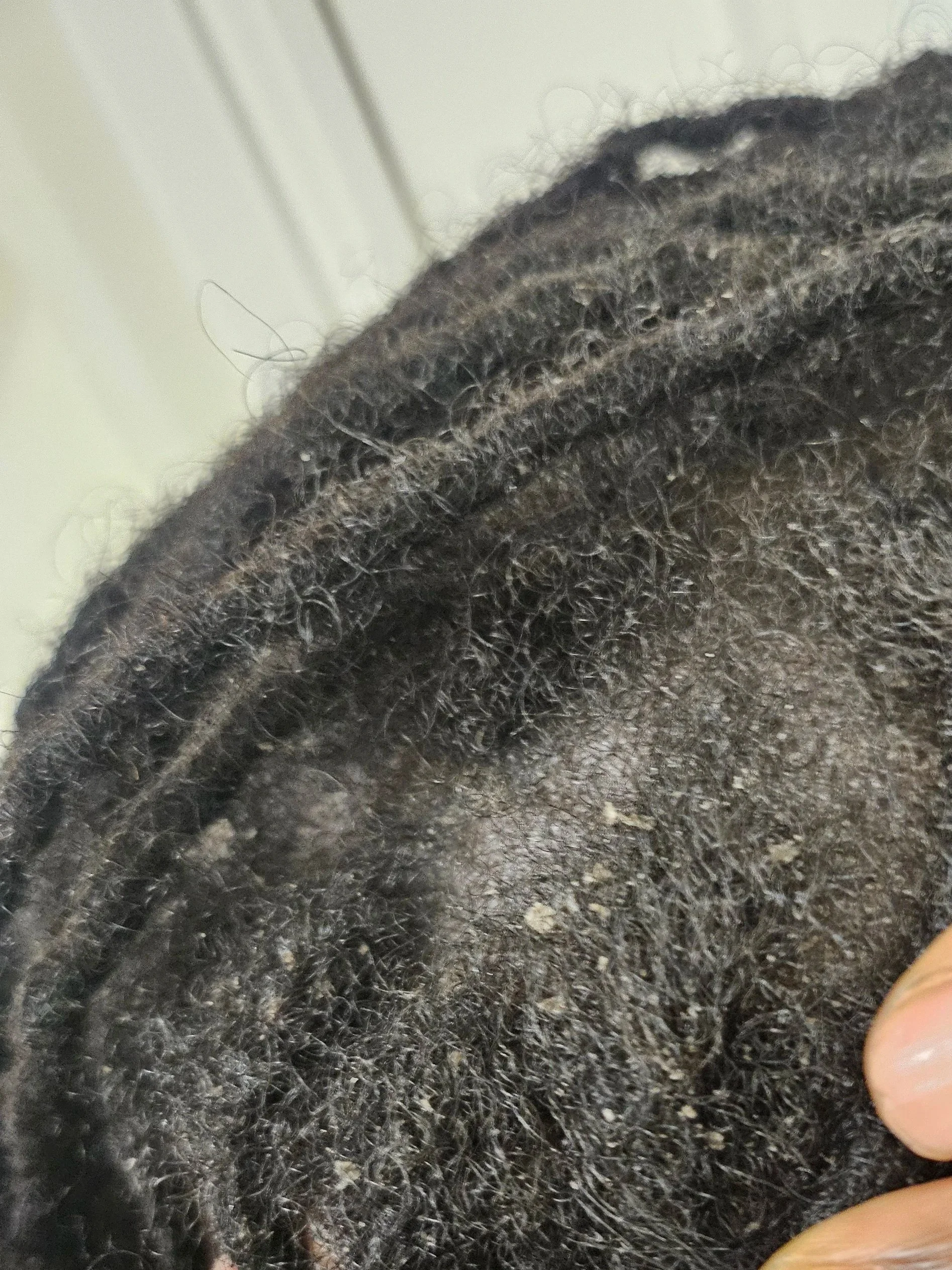
One of the biggest misconceptions is that dandruff itself is the problem, but it is often a symptom of something else.
Common Causes
Seborrhoeic dermatitis
Dry scalp conditions
Product build-up
Scalp sensitivity
Reactions to hair products/chemicals
How We Help
For clients with dryness, flaking, or irritation, we focus on identifying the cause. In most cases, the scalp is reacting to products. In other cases, there could be underlying scalp conditions that require specialist attention.
Mostly, we recommend the "bare treatment." [see what it is under alopecia]. This gives the scalp both the time to heal itself and leaves it product-free enough to help identify the problem.
Often, highly irritated scalps get better when product-free rather than when we add more products or chemicals.
Where symptoms persist beyond a couple of weeks on bare treatment, we refer for a trichologist or dermatologist to assess the underlying condition.
5. Lint Formation
Lint formation happens when fuzzy material attaches to locs. It is often more of a cosmetic concern that we see in mature locs. For some reason, our locs have a habit of picking up lint that’s totally off the natural colour of our locs. Once deeply embedded, lint can be difficult to remove completely.
Common Causes
Wool and fibre [from hats and scarves, headwraps and clothes]
Dust and environmental debris
Trapped scalp flakes
Product residue
How We Help
We first assess how deeply lint is embedded in the locs. This is to help determine the most suitable approach. First step...we remove visible lint before it becomes permanently trapped within the loc.
We also do loc detox treatments and advise clients on practices that help reduce future lint accumulation, for instance:
Covering hair when working in dusty environments
Wearing satin bonnets to sleep or using satin pillowcases,
Assessing and picking up lint from the hair when noticed
Weekly loc assessment to ensure no lint is embedded deeply into the loc
In more severe cases, where lint cannot be effectively removed, colour correction may be considered. This is where we introduce hair dying to camouflage lint.
Point to note: Lint is much easier to deal with when caught early.
Final Thoughts
Most issues affecting the health, growth, strength, and overall appearance of locs develop gradually and can be managed successfully with early identification.
At TressesbyK, our focus is always on helping clients understand what is happening with their hair, addressing the root cause where possible, and creating a plan that supports long-term loc health. Whether it is slippage, thinning, unravelling, scalp concerns, or lint, early intervention often makes all the difference.
Your locs are a long-term commitment, and with the right care and professional support, they can continue to thrive for years to come.
Follow us for more loc tips.
