

A Loctician’s Guide to Smarter Brand Collaborations
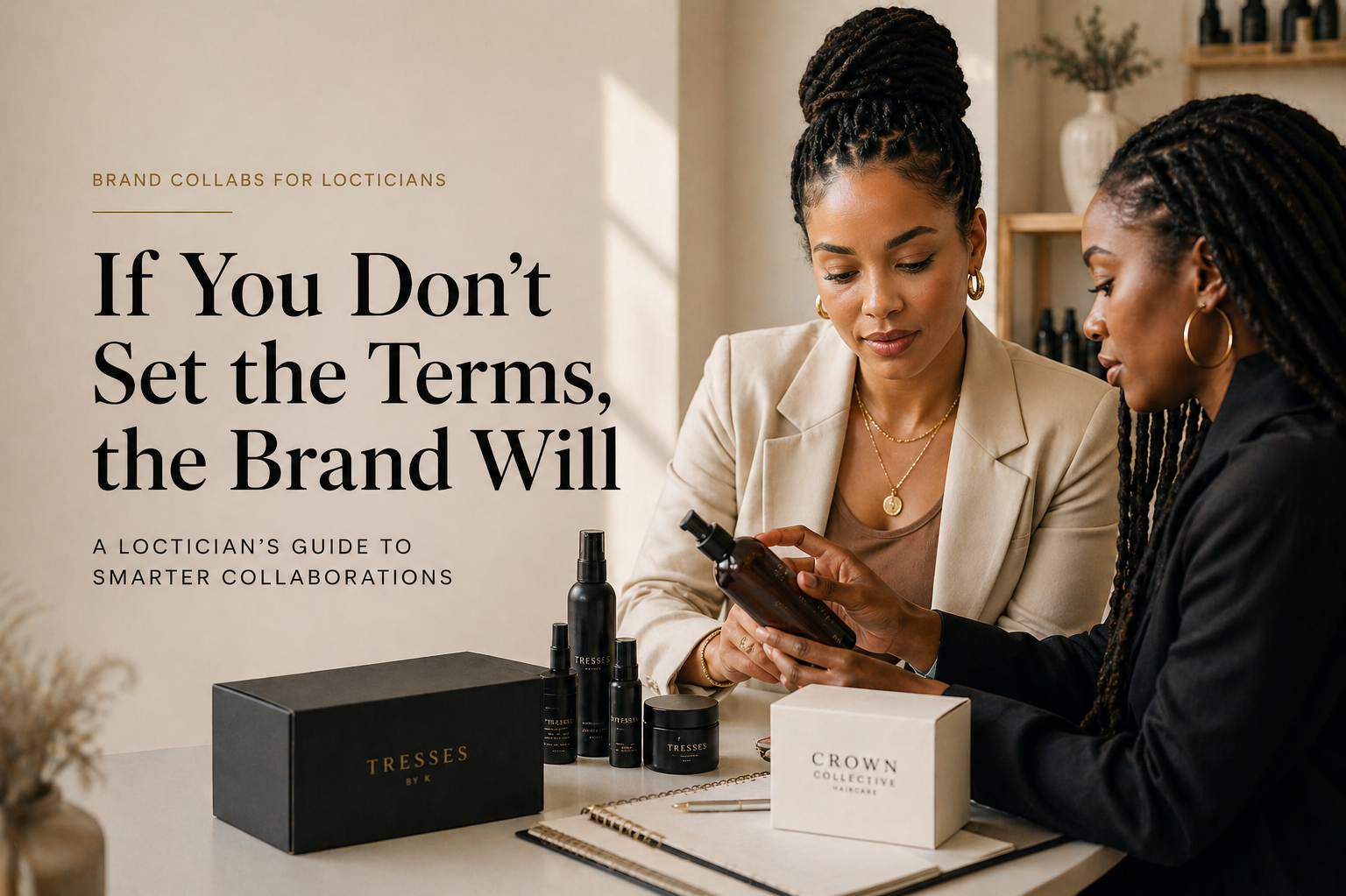
Last week, we received a message from a renowned hair brand.
The message read how they loved our work and had been following us for some time.
And now they wanted to collaborate so we could showcase both our works.
The collaborative gains would include:
Free hair products
Full day’s work payment and
A recommendation of our services to their wider audience.
We won’t even lie. It sounded good. We smiled. We felt our brand was becoming more visible.
But for some strange reason, we didn’t reply straight away.
Something made us take a pause.
Looking back, it could either have been fear or the scepticism that often comes with brand collaborations.
In that pause, we questioned exactly what we were agreeing to in that collaboration.
And that's a question most locticians forget to ask. And end up wasting their time, money and resources with brands and not getting all that was promised.
I hope that after reading this piece, you feel more informed the next time a brand approaches you for collaborative work.
A Brand Partnership Is Still a Business Deal
Let’s be honest.
Many of us locticians see “collaborations” and think:
Opportunity
Visibility
Growth
But what feels like a step forward for our loc brands could actually be something else for product brands.
For instance, a product brand may only see:
Access to your audience
Your skills
Your content
Your reputation
And those, if you’re unaware, are your business leverages.
So a brand collaboration is not a favour. It’s a business. As locticians, we have good audiences and are good at creating content. And collaborating brands have products that can elevate our loc businesses.
We showcase their products. They reward us in accordance with the agreed terms of the business.
Do you see the link now?
How to Stay in Control of Brand Collaborations (Without Being Difficult)
Learn to set your terms early in any brand collaboration.
When brands approach you, listen not only to their terms but also introduce yours from the onset of the collaborative discussion.
Don’t be harsh or rigid.
Be clear about what your expectations are at the end of that partnership.
Many loc stylists think control means being difficult. It really isn’t. It’s just you communicating what your brand stands for and what you aim to achieve by collaborating with the other brand.
It also ensures you get what your loc brand is worth, even as you showcase a different brand's product. Control will enable you not to mix up your brand’s ideologies with the product brand's. Because the partner brand will know what you stand for from the get-go.
Control may sound like:
“Let’s go through the details properly.”
“Can we move this to email?”
“This is what my installs include…”
“This is how I handle collaborations…”
“These are the details I need before confirming…”
That’s it. No hard messaging.
For instance, when we got the brand message, we didn’t rush.
We simply said:
“Let’s take this to email so we can discuss the details properly.”
That one step changed three key things for us:
It slowed the conversation down.
It made it more professional.
It gave us space to think.
Can’t you just close the deal on Messenger? You may ask. And yes, you can. Whatever works for you, really. For us, email feels more professional.
Here are More Practical Steps to Help You Stay in Control of Brand Deals
1. Move the conversation to your preferred platform from the onset.
What: Take it to your official communication platform
How: Ask questions like “Can we continue this over email so we can go through details properly?”
Why: DMs may be seen as casual. Email makes it clear this is business.
2. Ask for full details before agreeing
What: Payment, expectations, timeline, content, e.t.c
How: Ask your questions in one clear message. Give examples of what you currently do for context if you have to.
Why: You can’t agree to what you don’t fully understand. And the brand can't know your expectations if you don't table them upfront.
3. State your own working style
What: Explain how you usually handle collaborations
How: say things like, “This is how I normally approach my installs and brand work…”
Why: It shows confidence and also defines the scope of work the brand expects of you.
4. Don’t rush your answer
What: Take your time
How: You may say, “Let me review this, and I’ll get back to you.”
Why: A quick yes could lead to slow regret, especially when you rush to secure the collaboration before understanding the terms fully.
5. Treat the brand collaboration like a business, not a favour
What: See your work as valuable
How: Think in terms of exchange, not gratitude. Understand that your skills earned you the invitation, and it’s not just a mere favour the other brand is doing for you.
Why: You show up differently when you respect your own value.
Just so you remember…
Before you sign any brand deal, you need to understand what you’re saying yes to.
A good brand will respect your clarity. The wrong one will struggle with it. And that alone will tell you everything you need to know.
If you’re a loctician learning to move smarter in this space... Stay close.
We’ll keep sharing our lessons so you don’t have to learn it the hard way.
Join our newsletter for more tips.
