

Loc Products: How to safely switch products while retaining the beauty of your locs.
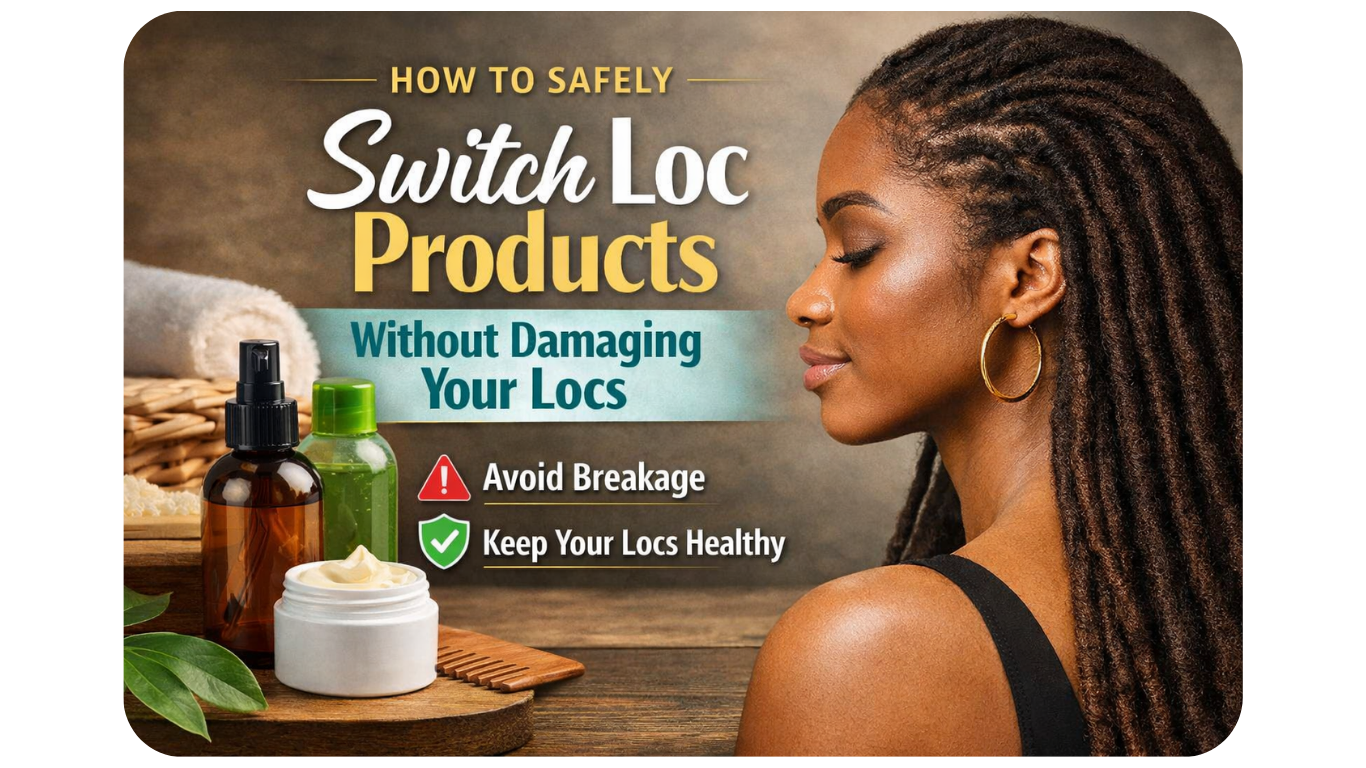
Locs look strong, but they are actually the weakest hairstyles.
Here’s why.
Unlike loose hair that can easily be combed out. Locs can’t, so they hold onto stress and tension, which makes them easier to damage over time.
In simple terms, locs retain everything. Water, oil, dirt, product, you name it.
If you use the wrong products or switch products too quickly, you may start to notice scalp issues, such as slow growth, weak areas, or build-up inside the loc.
Now, if you’ve ever asked what works for my locs or searched for the best products for locs, this guide is here to help you choose with clarity instead of trial and error.
Why Product Choice Is Critical for Healthy Locs
Product choice matters more for locs than for loose hair.
This is because in locs, residue builds from the inside, not just on the surface. You can easily wash off products from loose hair if it doesn't work. For locs, not quite straightforwardly.
Unknowingly, some of us use heavy products on our locs. These may be in the form of shampoos, conditioners, moisturisers, oils, and some leave-in treatments.
If that’s you, over time, you may notice:
Blocked scalp pores that appear like constant flaking
Too much moisture, which gives your hair a funky odour
Slow healthy growth
Hidden build-up, including mildew inside locs
Choosing the right product reduces these risks.
Continue reading to discover some of our recommended local products. Meanwhile, here is a simple suggestion:
Use products that absorb easily into your locs and rinse clean when you wash.
Two main things to do before changing to Any New Loc Product
If you are a loc head, you don’t have the luxury to switch products like other hairstyles.
I know that sounds so limiting. But here is the reason.
Locs, as we have seen, absorb everything. And everything includes our food aroma and the daily perfumes we wear on our bodies.
That absorption happens over time. Similarly, just as it occurs over time, it also requires time to be washed off. Anything that your locs absorb gets intertwined in the strands and requires time, sometimes even deep detoxing, to be entirely removed from your locs.
For a smooth switch, first review what you currently use. What’s already in your hair helps you make the right decision by informing you of what to avoid and what to try.
Secondly, discuss your intended switch with your loctician.
Talk about:
The product you use now
How often you apply it
How long you’ve used it
The results you want from the new product
The products you already have in mind
This helps both of you decide whether your locs need a gentle reset or a full detox before the switch, leading to better product recommendations.
Your loctician also already knows some products to recommend that will shorten your testing period.
When it comes to applying new products…
Always allow your locs time to clear old residue between products before applying new ones. You want to avoid applying a new product to your locs surface while the old product is still trapped deep inside your strands.
Here is a simple transition process you can follow:
Wash locs with a non-residue shampoo or detoxify if needed
Leave locs product-free for 48 hours
Wash again to remove deeper residue
Introduce the new product lightly, starting with the scalp
Wait 2–6 months to assess real results
This approach reduces irritation and prevents unnecessary build-up in your locs.
Testing Products on Your Locs Before Full Use.
The most common question we get on our chair is “How do I know if the product is going to be right for me?”
Our best answer: Test it.
Testing products takes many forms. Focus on whether you want to apply the product to either your scalp or your locs.
Here are the tests we recommend you do before switching your locs products.
Patch Test on the Scalp
Do this before the full application.
Apply to a small area and wait 24–48 hours.
Things to watch for: Itching, flakes, burning, or discomfort.
2. Testing on Loc Length
Apply to the tip of one loc or on a few strands of your locs. This applies to products such as moisturisers, some leave-in conditioners, and loc treatment products.
Things to watch for: Stiffness, residue, white patches, or discolouration.
3. Testing Hair Dye on Locs
Dyes are usually sensitive to most skin, hair styles, and textures.
You should exercise caution when testing dye on locs, as they absorb and retain colour for a long time. This increases the chances of damage.
First, conduct an allergy test by applying a small patch behind each ear.
If you detect no allergies, test the colour on a loc. Apply the dye at the tip of one of your locs and monitor the reaction. Should anything go wrong, it’s easy to trim off that loc end without making much difference to the rest of the strand.
Wait 48 hours and watch for signs of brittleness, excessive dryness, detangling, or thinning. Look for anything that may raise concern should you apply the dye to your entire head.
Caring for Locs After Applying a New Product
Applying or switching loc products is a primary action. You need other secondary habits for the products to work effectively.
Here is our secondary recommendation list:
Cover locs with a satin bonnet
Follow manufacturer instructions
Wash regularly
Protect locs during swimming or heavy sweating
Maintain your loctician visits
Maintain a healthy maintenance schedule
Book a loctician consultation to discuss any concerns noticed since using the new product.
How to Know If a Product Is Working for Your Locs
Start with your goal.
What prompted you to find a new product? Were you looking for length, moisture, fullness, reduced thinning, or shine?
Knowing your why will help you effectively assess if the product you chose is working or not.
A product is said to be working if:
Your scalp feels calm and free
Locs feel light, not coated
Moisture lasts
You see slow, steady improvement
Or achieving whatever you loc goal was
The progress should match your goals. If it doesn’t, please talk to your loctician for further guidance. You may need to change either how you use the product, or switch the product entirely.
Usually, products don’t work because:
Your application method is flawed
It’s not the right product for you
You have poor secondary habits
You are combining too many products at the same time
If nothing changes by month six, reassess the situation.
How to Know If a Product Is Not Working for Your Locs
Signs usually appear within weeks:
Flaking or itching
Increased frizz
No visible improvement
Thinning, weak spots, pungent smell, or heaviness
Too much moisture retention
New problems/issues noted
Lightweight Ingredients That Work Best for Locs
Water-Based Loc Moisturisers
(moisture retention)
Examples:
Pure rosewater sprays
Aloe vera juice mists
Water-based loc refreshers
2. Lightweight Oils for Loc Scalp Health
(non-greasy oils,)
Examples:
Jojoba oil blends
Grapeseed oil serums
Sweet almond oil
Using less oil consistently works better.
3. Residue-Free Styling Products for Locs
(no build-up)
Examples:
Aloe-based locking gels
Light-hold loc sprays
Parting shot...
Don’t overapply products to your locs. Read the manufacturer's guidelines for use and always, always talk to your loctician before switching loc products. If you notice any unwanted changes, stop using the product immediately and wash or detoxify, depending on the severity of the changes.
